The Annapurna Base Camp Trek is one of Nepal’s most iconic Himalayan adventures, offering an unforgettable journey into the heart of the Annapurna Sanctuary. Situated beneath the majestic Annapurna Massif, this world-renowned trekking route combines breathtaking mountain scenery, diverse landscapes, rich cultural encounters, and rewarding high-altitude experiences.
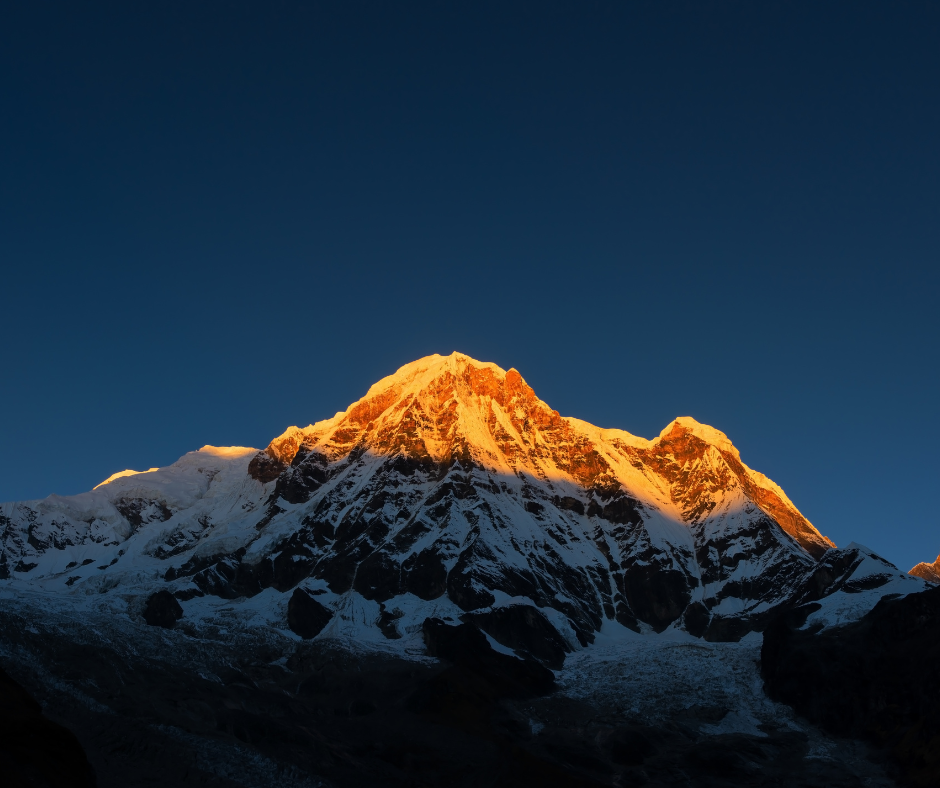
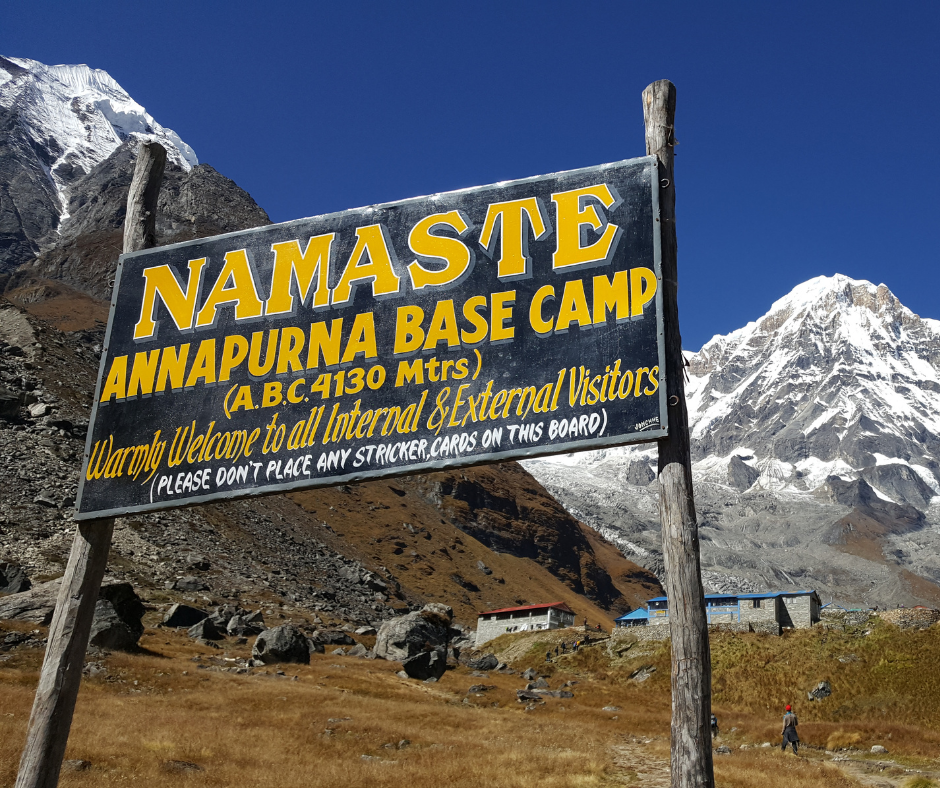
Mount Annapurna I stands at 8,091 meters, making it the tenth-highest mountain in the world. The Annapurna Massif includes several peaks exceeding 7,000 meters and is surrounded by deep river valleys, glacier-fed rivers, dense forests, and traditional mountain settlements. At the center of this spectacular region lies Annapurna Base Camp at 4,130 meters, a natural amphitheater surrounded by some of the most impressive peaks in the Himalayas.
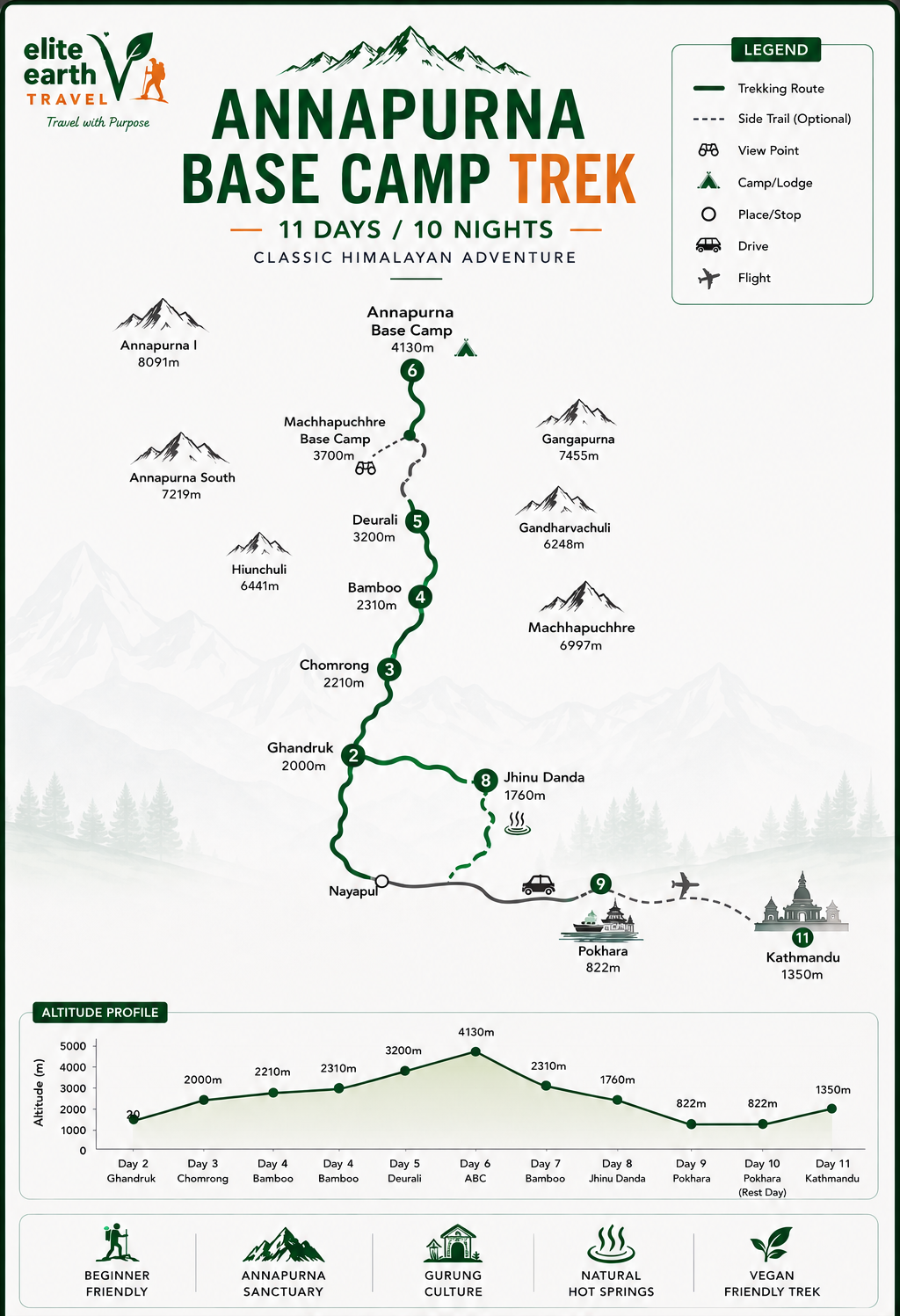
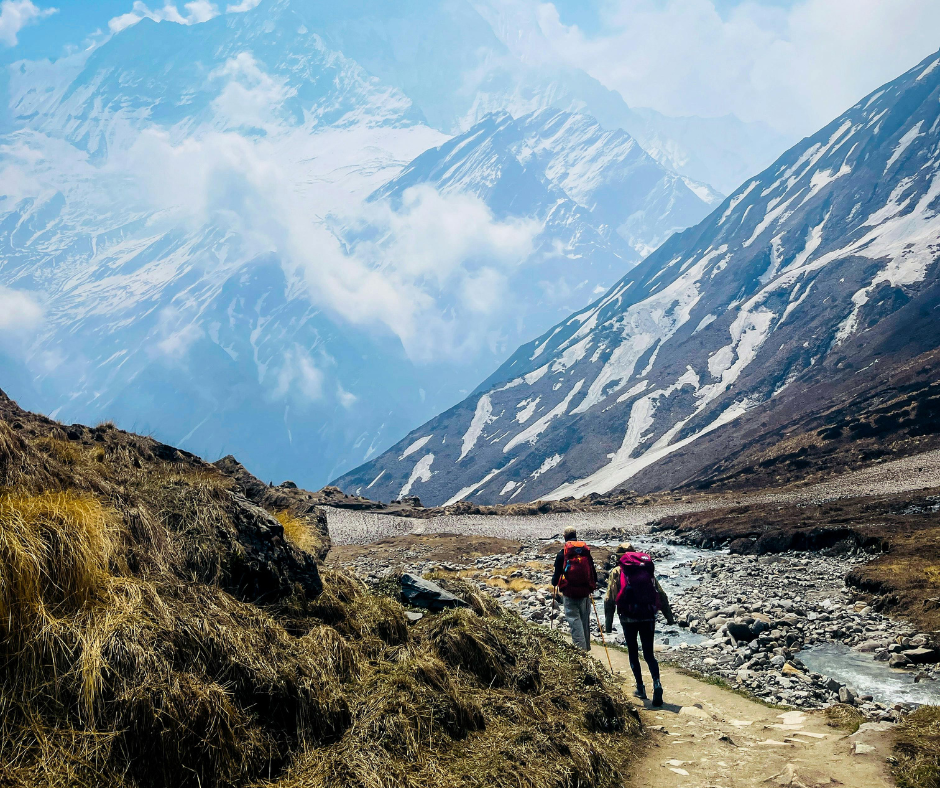
The trek begins with a scenic journey from Kathmandu to Pokhara before entering the Annapurna Conservation Area. Along the route, trekkers pass through picturesque Gurung villages, terraced farmlands, rhododendron forests, bamboo groves, alpine landscapes, and glacial valleys. The trail gradually ascends through Ghandruk, Chomrong, Bamboo, and Deurali before reaching the magnificent Annapurna Base Camp.
Beyond its natural beauty, the Annapurna Base Camp Trek offers a unique opportunity to experience the culture, traditions, and hospitality of the Gurung communities who have inhabited these mountains for generations. The route also carries historical significance as an ancient pilgrimage and trading pathway connecting Nepal with Tibet.
This trek is ideal for travelers seeking a classic Himalayan experience that combines mountain adventure, cultural immersion, and stunning panoramic scenery within a relatively accessible trekking itinerary.
Quick Facts
| Feature | Details |
|---|---|
| Region | Annapurna Region |
| Duration | 11 Days |
| Maximum Altitude | 4,130 m |
| Trek Grade | Moderate |
| Accommodation | Hotel & Teahouse |
| Best Seasons | Spring and Autumn |
| Starting Point | Kathmandu |
| Ending Point | Kathmandu |
| Permit Required | ACAP |
| Major Ethnic Groups | Gurung & Magar |
Annapurna Base Camp Trek Difficulty
One of the most frequently asked questions about the Annapurna Base Camp Trek is whether it is suitable for beginners. The trek is generally classified as a moderate trekking adventure and can be completed by anyone with a reasonable level of fitness and determination.
Unlike mountaineering expeditions, the Annapurna Base Camp Trek does not require technical climbing skills, ropes, or specialized equipment. The primary challenges come from daily walking distances, continuous ascents and descents, and the high altitude of 4,130 meters at Annapurna Base Camp.
Trekkers typically walk between 5 to 7 hours per day through a combination of stone staircases, forest trails, mountain ridges, and alpine terrain. Proper acclimatization, adequate hydration, and a steady pace greatly reduce the risk of altitude-related issues.
With proper preparation, the Annapurna Base Camp Trek is an excellent choice for first-time trekkers looking to experience the Himalayas.
Difficulty Overview
- Trek Grade: Moderate
- Maximum Altitude: 4,130 m
- Daily Walking Hours: 5–7 Hours
- Technical Climbing: Not Required
- Suitable for Beginners: Yes, with basic fitness preparation
- Risk of Altitude Sickness: Moderate
Best Time for Annapurna Base Camp Trek
The Annapurna Base Camp Trek can be completed throughout most of the year; however, spring and autumn offer the most favorable trekking conditions.
Spring Season (March – May)
Spring is one of the best times for the Annapurna Base Camp Trek. Rhododendron forests bloom in vibrant colors, temperatures remain comfortable, and mountain views are generally excellent. Wildlife activity is also at its peak during this season.
Autumn Season (September – November)
Autumn is considered the most popular trekking season in Nepal. The weather is stable, skies are clear, and visibility is exceptional. Trekkers can enjoy uninterrupted views of Annapurna I, Machhapuchhre, Hiunchuli, and the surrounding Himalayan range.
Winter Season (December – February)
Winter trekking offers peaceful trails and dramatic snow-covered landscapes. While temperatures can drop significantly at higher elevations, experienced trekkers seeking solitude often find this season highly rewarding.
Monsoon Season (June – August)
The monsoon brings lush green landscapes and fewer trekkers. Although rainfall can make trails slippery, the region becomes exceptionally beautiful with blooming vegetation and cascading waterfalls.
Annapurna Base Camp Trek Cost
The Annapurna Base Camp Trek cost varies depending on group size, accommodation preferences, transportation options, and trekking services included in the package.
Most Annapurna Base Camp Trek packages include transportation, permits, accommodation, meals during trekking, licensed guides, porter services, and logistical support. Additional expenses may include personal equipment, travel insurance, hot showers, charging facilities, Wi-Fi services, and gratuities.
At Elite Earth Travel, we provide transparent pricing with no hidden costs, ensuring trekkers receive excellent value while supporting ethical tourism and local communities.
Permits Required for Annapurna Base Camp Trek
The Annapurna Base Camp Trek lies within the protected Annapurna Conservation Area and requires valid trekking permits before entering the region.
Annapurna Conservation Area Permit (ACAP)
The ACAP permit contributes to environmental conservation, trail maintenance, and community development projects within the Annapurna region.
TIMS Card (If Applicable)
Depending on current government regulations and trekking arrangements, trekkers may also require a Trekkers' Information Management System (TIMS) card.
Elite Earth Travel handles all permit arrangements, allowing trekkers to focus entirely on their adventure.
Accommodation and Food During the Trek
Accommodation throughout the Annapurna Base Camp Trek is provided in traditional mountain teahouses operated by local families. These lodges offer comfortable rooms, warm hospitality, and opportunities to experience authentic Himalayan culture.
Food options are surprisingly diverse and include:
- Traditional Dal Bhat
- Fried Rice
- Noodles
- Soups
- Tibetan Bread
- Pancakes
- Pasta
- Seasonal Vegetables
- Tea and Coffee
Elite Earth Travel proudly offers vegan-friendly trekking experiences with carefully selected plant-based meal options designed to support energy, recovery, and overall well-being at high altitude.
Why Choose Elite Earth Travel for Annapurna Base Camp Trek
Elite Earth Travel specializes in ethical, sustainable, and community-focused trekking experiences across Nepal.
Our Commitment
- Experienced local guides with extensive mountain knowledge.
- Ethical porter welfare policies and fair compensation.
- Sustainable tourism practices that benefit local communities.
- Vegan-friendly trekking options throughout the journey.
- Personalized service and small group experiences.
- Safety-focused trekking operations with emergency preparedness.
- Transparent pricing with no hidden charges.
Our goal is not simply to guide trekkers to Annapurna Base Camp but to create meaningful experiences that positively impact both travelers and the communities they visit.
✅ Airport transfers in Kathmandu.
✅ Domestic flight between Kathmandu and Pokhara (or private tourist transportation as per package).
✅ Hotel accommodation in Kathmandu and Pokhara.
✅ Teahouse accommodation during trekking.
✅ Annapurna Conservation Area Permit (ACAP).
✅ Licensed and experienced trekking guide.
✅ Porter service during the trek.
✅ Three meals per day during trekking.
✅ Seasonal fruits, tea, and drinking water support.
✅ Vegan-friendly trekking meal options.
✅ Guide and porter insurance.
✅ First aid medical kit and oximeter.
✅ Government taxes and service charges.
❌ International airfare.
❌ Nepal entry visa fees.
❌ Travel insurance and emergency rescue coverage.
❌ Personal trekking equipment.
❌ Personal expenses.
❌ Hot showers and charging fees during trekking.
❌ Wi-Fi and communication expenses.
❌ Alcoholic beverages and bottled drinks.
❌ Additional accommodation caused by delays or unforeseen circumstances.
❌ Personal shopping and souvenirs.
❌ Tips for guides and porters.
Arriving in Kathmandu for the Annapurna Base Camp (ABC) trek sets the stage for a classic Himalayan journey. The bustling capital welcomes trekkers with a mix of ancient heritage and modern energy.
On the first day, we are going to fly in to Pokhara and then drive for about 1 hour to Nayapul which is the starting point of our trek. Then we are going to trek for 4 to 5 hours from Nayapul to reach Ghandruk. A village in the Modi Khola Valley of Nepal’s Annapurna region, Ghandruk offers panoramas of the surrounding Annapurna massif, including good views of Annapurna I, the world’s tenth-highest mountain. And yet, the village only stands at around 2,000 m (6,562 ft), meaning you can look out over snow-drenched Himalaya peaks without needing to trek at altitude. Visiting Ghandruk also gives you a snapshot of everyday local life in Nepal’s mountains, especially that of the Gurung people.
After spending our first night in Ghandruk village while immersing ourselves in their culture, we will start day 2 by trekking to Chomrong. Chomrong is a small village located inside the Annapurna Conservation Area. It’s located on the Annapurna Base Camp trekking route making it a popular stop for trekkers in the region. Unlike other villages along this route, Chomrong existed before tourism making it a unique village to experience the local culture. Chomrong itself is a small settlement, which is an old off shoot of Ghandruk and is also inhabited by Gurung people. There is a Buddhist stupa at the bottom of the village.
After the sun rises, you will have morning rituals and breakfast to start the day’s trek to Bamboo. Bamboo Village is a picturesque settlement situated along the Annapurna Base Camp trail in the Annapurna region of Nepal. It serves as a popular stopover for trekkers on their way to Annapurna Base Camp, offering a tranquil and scenic environment amidst the Himalayan landscape. Bamboo Village is located at an elevation of approximately 2,310 meters (7,580 feet) above sea level. The village is renowned for its lush greenery and serene ambiance. It is surrounded by dense forests of bamboo, which lend the village its name. The towering bamboo groves create a unique atmosphere, providing shade and a soothing environment for trekkers..
Having a wonderful stay at Bamboo village, upon completing morning rituals start trek towards Deurali village. Deurali village is a small administrative locality in Kaski District of central-north Nepal. It had the total population of 2882 as per the census of 1991 and it is basically present along the Trek of Annapurna Sanctuary. Deurali village is basically a locality on trekking trail and the visitors generally make a little stop here for acclimatization. In addition, the town offers panoramic scenery of the mountains and of the water channels. Most of the area is lush green.
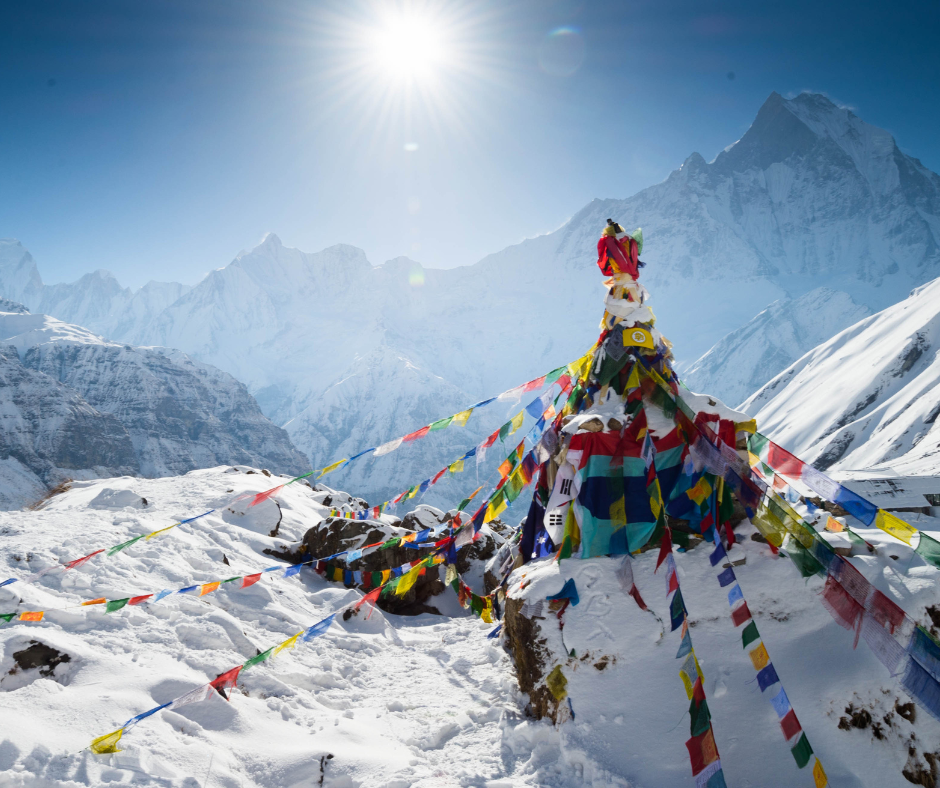
Deurali to Annapurna base camp distance is 7.7 kilometers/4.7 miles. Trail ascends gradually and takes 4 to 5 hours to reach Annapurna base camp by foot. The Annapurna Base Camp is a small cluster of lodges opposite the Annapurna glacier. As you look up from the edge of the glacier, you come face to face with the Annapurna massif. Annapurna I, III and South, Gangapurna, Gandharvachuli and Machapuchare are all there to meet your gaze when your eyes rest upon them.
Following the Modi Khola and rhododendron forests, it takes around 7 hours to reach Bamboo. It’s a long but not too hard trail. Also, you might want to wake up extra early in order to watch the sun rising over the majestic Annapurna Range.
After trekking back to Bamboo village and spending a night there, we are going to trek to Jhinu Danda on day 7. Jhinodanda (also Jhinu Danda), at 1,760 meters (5,774 feet), is a hidden gem that offers trekkers a perfect blend of natural beauty, relaxation, and cultural immersion in the Annapurna Sanctuary. This picturesque village in the Kaski district is known for its hot springs, serene landscapes, and breathtaking views of the surrounding Himalayan peaks. The village is perched on a hillside overlooking the Modi Khola River and offers panoramic views of Machapuchare (Fishtail) and nearby snow-capped peaks.
After a relaxing day of immersing ourselves in the natural beauty of Jhinu Danda, we will trek back to Nayapul, the starting point of our trek.
After completing our trek to Annapurna Base Camp, we will have a rest day in Pokhara to rejuvenate ourselves. Pokhara is a metropolitan city located in central Nepal, which serves as the capital of Gandaki Province and is declared as the tourism capital of Nepal. It is the second most populous city of the nation after Kathmandu. Pokhara’s tranquil beauty has been the subject of inspiration for many travel writers. Its pristine air, spectacular backdrop of snowy peaks, blue lakes and surrounding greenery make it ‘the jewel in the Himalaya’, a place of remarkable natural disposition. With the magnificent Annapurna range forming the backdrop and the serenity of the cluster of nine lakes with three major ones - Phewa, Rupa and Begnas. Pokhara is a great destination for a weekend getaway as well as a long relaxing holiday.
On the last day, we are going to fly back to Kathmandu. As you leave this special area of Nepal, wave goodbye to the massive, majestic, and magical Machhapucchre mountain and The Annapurna Mountain ranges.
Click image to enlarge