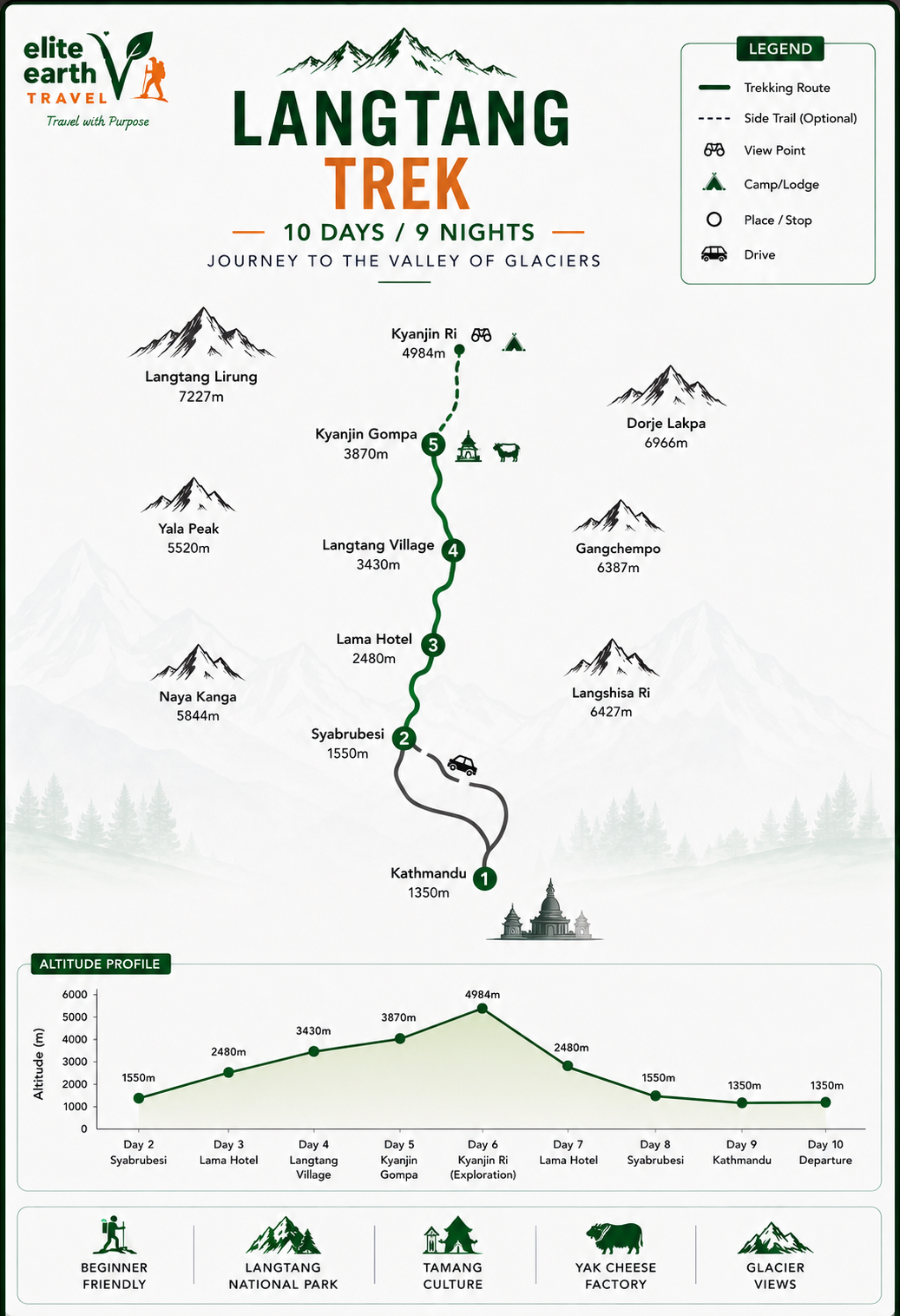
The Langtang Valley Trek is one of Nepal’s most rewarding Himalayan adventures, offering an unforgettable journey through pristine mountain landscapes, ancient Buddhist culture, and spectacular alpine scenery. Located north of Kathmandu near the Tibetan border, the Langtang region is often referred to as the “Valley of Glaciers” due to its dramatic mountain terrain, glacial valleys, and snow-capped peaks.
Home to Langtang National Park, Nepal’s first Himalayan national park, this remarkable trekking destination showcases diverse ecosystems ranging from subtropical forests and alpine meadows to rugged high-altitude landscapes. The trek provides breathtaking views of Langtang Lirung (7,227m), Dorje Lakpa, Ganesh Himal, Langshisa Ri, Yala Peak, and numerous surrounding Himalayan summits.
The journey begins with a scenic drive from Kathmandu to Syabrubesi before following the Langtang Khola through dense rhododendron and bamboo forests. Along the route, trekkers pass traditional Tamang villages, Buddhist monasteries, yak pastures, and alpine settlements before reaching the picturesque village of Kyanjin Gompa, the cultural and spiritual heart of the Langtang Valley.
Beyond its natural beauty, the Langtang Valley Trek offers a unique opportunity to experience authentic Tamang culture, Tibetan-influenced traditions, and centuries-old Buddhist heritage. The warm hospitality of local communities, combined with breathtaking mountain scenery and relatively uncrowded trails, makes this trek an ideal choice for travelers seeking an immersive Himalayan experience.
This trek is perfect for adventurers looking for a moderate trekking challenge, rich cultural encounters, and stunning Himalayan panoramas within easy reach of Kathmandu.
Quick Facts
| Feature | Details |
|---|---|
| Region | Langtang Region |
| Duration | 10 Days |
| Maximum Altitude | 4,984 m (Tserko Ri) |
| Trek Grade | Moderate |
| Accommodation | Hotel & Teahouse |
| Best Seasons | Spring and Autumn |
| Starting Point | Kathmandu |
| Ending Point | Kathmandu |
| Permit Required | Langtang National Park Permit |
| Major Ethnic Groups | Tamang & Tibetan Communities |
Langtang Trek Difficulty
The Langtang Trek is considered a moderate Himalayan trekking adventure and is one of the best alternatives to the Everest and Annapurna regions for trekkers seeking a quieter and more authentic experience.
Although the trek does not involve technical climbing or mountaineering skills, it includes several days of continuous ascent through mountain trails, forests, and alpine terrain. The highest point of the trek is typically Kyanjin Ri (4,773 m) or Tserko Ri (4,984 m), depending on the itinerary. Trekkers should therefore be prepared for high-altitude conditions and long walking days.
The route is suitable for beginners with good physical fitness, as well as experienced trekkers looking for a shorter Himalayan adventure close to Kathmandu. Proper acclimatization, hydration, and a steady pace are essential for a safe and enjoyable experience.
Difficulty Overview
- Trek Grade: Moderate
- Maximum Altitude: 4,984 m (Tserko Ri)
- Daily Walking Hours: 5–7 Hours
- Technical Climbing: Not Required
- Suitable for Beginners: Yes, with preparation
- Risk of Altitude Sickness: Moderate
- Recommended Fitness Level: Moderate
Best Time for Langtang Trek
The Langtang Trek can be completed throughout the year, but spring and autumn provide the most favorable weather conditions and mountain visibility.
Spring Season (March – May)
Spring transforms the Langtang Valley into a colorful paradise filled with blooming rhododendrons, wildflowers, and lush forests. Temperatures remain comfortable, and the mountain views are exceptional.
Why Trek in Spring?
- Blooming rhododendron forests
- Pleasant trekking temperatures
- Clear mountain views
- Active wildlife and birdlife
Autumn Season (September – November)
Autumn is the most popular season for the Langtang Trek. Following the monsoon, the skies become crystal clear, providing spectacular views of Langtang Lirung, Dorje Lakpa, Ganesh Himal, and surrounding peaks.
Why Trek in Autumn?
- Stable weather
- Outstanding visibility
- Comfortable temperatures
- Excellent photography opportunities
Winter Season (December – February)
Winter offers peaceful trails, snow-covered landscapes, and fewer trekkers. While temperatures can be cold at higher elevations, the mountain scenery is breathtaking.
Monsoon Season (June – August)
The monsoon season brings lush greenery and dramatic landscapes. Although rainfall is common, the forests and valleys become incredibly vibrant and beautiful.
Langtang Trek Cost
The Langtang Trek is one of Nepal's most affordable Himalayan trekking adventures. Its proximity to Kathmandu eliminates the need for expensive domestic flights, making it a budget-friendly option for travelers.
The overall cost depends on factors such as group size, accommodation preferences, transportation arrangements, guide and porter services, and trek duration.
Most Langtang Trek packages include:
- Ground transportation from Kathmandu
- Trekking permits
- Accommodation during the trek
- Meals during trekking
- Licensed trekking guide
- Porter services
- Trekking logistics and support
Additional expenses may include personal gear, travel insurance, Wi-Fi, charging facilities, hot showers, snacks, beverages, and tips.
Elite Earth Travel provides transparent pricing while ensuring ethical tourism practices and fair treatment of guides and porters.
Permits Required for Langtang Trek
The Langtang Trek passes through Langtang National Park, Nepal's first Himalayan national park, and requires official permits.
Langtang National Park Entry Permit
This permit contributes to conservation efforts, wildlife protection, trail maintenance, and community development within the region.
Permit Requirements
- Valid Passport Copy
- Passport-Sized Photographs (if required)
- Trek Registration Details
- Applicable Permit Fees
Elite Earth Travel handles all permit arrangements to ensure a smooth trekking experience.
Accommodation and Food During the Trek
Accommodation along the Langtang Trek is provided in traditional mountain teahouses operated by local Tamang families. These lodges offer comfortable lodging, warm hospitality, and an opportunity to experience authentic Himalayan culture.
Food Available During the Trek
Trekkers can enjoy a wide variety of meals including:
- Traditional Dal Bhat
- Fried Rice
- Noodles
- Pasta
- Soups
- Tibetan Bread
- Pancakes
- Muesli
- Seasonal Vegetables
- Tea and Coffee
At Elite Earth Travel, we proudly offer vegan-friendly trekking experiences with nutritious plant-based meal options available throughout the trek.
Why Choose Elite Earth Travel for Langtang Trek
Elite Earth Travel specializes in sustainable, ethical, and community-focused trekking experiences throughout Nepal.
Our Commitment
- Experienced local trekking guides.
- Ethical porter welfare and fair compensation.
- Sustainable and eco-friendly trekking practices.
- Vegan-friendly trekking experiences.
- Personalized service and small group departures.
- Transparent pricing with no hidden costs.
- Community-based tourism that supports local livelihoods.
- Safety-focused operations with trained mountain staff.
Our mission is to create meaningful journeys that connect travelers with nature, local culture, and responsible adventure travel.
✅ Airport transfers in Kathmandu.
✅ Hotel accommodation in Kathmandu.
✅ Ground transportation between Kathmandu and Syabrubesi.
✅ Teahouse accommodation during trekking.
✅ Langtang National Park Entry Permit.
✅ TIMS Card (if required by regulations).
✅ Licensed and experienced trekking guide.
✅ Porter service during the trek.
✅ Three meals per day during trekking.
✅ Seasonal fruits, tea, and drinking water support.
✅ Vegan-friendly trekking meal options.
✅ First aid medical kit and oximeter.
❌ International airfare.
❌ Nepal entry visa fees.
❌ Travel insurance and emergency rescue coverage.
❌ Personal trekking equipment.
❌ Personal expenses.
❌ Hot showers and charging fees during trekking.
❌ Wi-Fi and communication expenses.
❌ Alcoholic beverages and bottled drinks.
❌ Personal shopping and souvenirs.
❌ Tips for guides and porters.
Upon arrival at Tribhuvan International Airport, our representative will welcome you and transfer you to your hotel. After check-in, enjoy a trek briefing and prepare for your upcoming Langtang adventure. Accommodation: Hotel
After breakfast, begin a scenic drive north of Kathmandu through terraced hills, river valleys, and mountain villages. The journey offers beautiful views of the Himalayan foothills before arriving at Syabrubesi, the gateway to the Langtang Valley. Driving Duration: 7–8 Hours Accommodation: Teahouse Meals: Breakfast, Lunch, Dinner
Following the Langtang Khola, the trail gradually ascends through dense forests of oak, rhododendron, and bamboo. Along the way, trekkers may spot wildlife including monkeys and various bird species before reaching Lama Hotel. Walking Duration: 5–6 Hours Accommodation: Teahouse Meals: Breakfast, Lunch, Dinner
Today’s trail climbs steadily through forested landscapes before opening into alpine terrain. Enjoy magnificent views of Langtang Lirung while passing traditional settlements and yak grazing areas before arriving at Langtang Village. Walking Duration: 5–6 Hours Accommodation: Teahouse Meals: Breakfast, Lunch, Dinner
The trail continues through spectacular mountain scenery as we make our way to Kyanjin Gompa. Surrounded by towering Himalayan peaks, this beautiful settlement serves as the cultural and spiritual center of the Langtang region. Walking Duration: 3–4 Hours Accommodation: Teahouse Meals: Breakfast, Lunch, Dinner
Today is dedicated to acclimatization and exploration. Hike to Kyanjin Ri or Tserko Ri for breathtaking panoramic views of Langtang Lirung, Langshisa Ri, Dorje Lakpa, Yala Peak, and surrounding Himalayan ranges before returning to Kyanjin Gompa. Walking Duration: 5–7 Hours Accommodation: Teahouse Meals: Breakfast, Lunch, Dinner
After a memorable morning in the high Himalayas, begin the descent through Langtang Village and beautiful mountain landscapes before returning to Lama Hotel. Walking Duration: 6–7 Hours Accommodation: Teahouse Meals: Breakfast, Lunch, Dinner
Continue descending through forests and riverside trails while enjoying final views of the Langtang Valley. Arrive at Syabrubesi for a relaxing evening. Walking Duration: 5–6 Hours Accommodation: Teahouse Meals: Breakfast, Lunch, Dinner
After breakfast, drive back to Kathmandu along scenic mountain roads. Upon arrival, enjoy free time for sightseeing, shopping, or relaxation. Driving Duration: 7–8 Hours Accommodation: Hotel Meals: Breakfast, Lunch
After breakfast, transfer to Tribhuvan International Airport for your onward journey. Depart Nepal with unforgettable memories of the Langtang Valley and the Himalayas. Meals: Breakfast